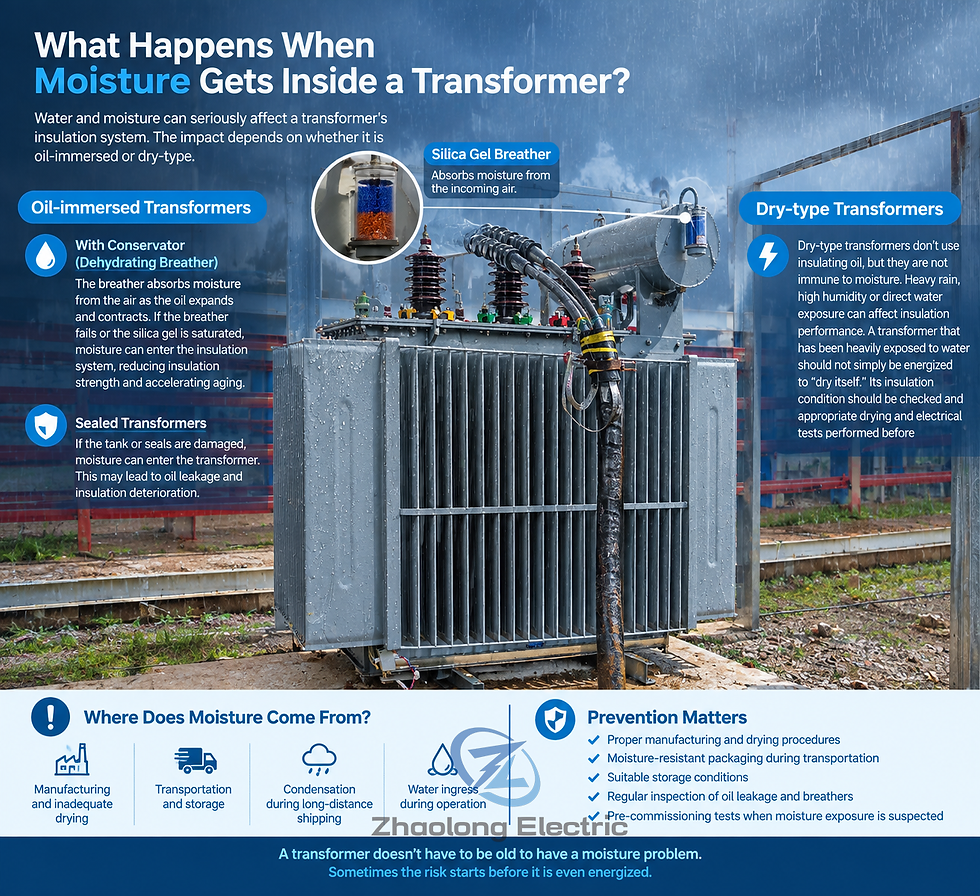
What Happens When Moisture Gets Inside a Transformer? Causes, Risks and Prevention
Moisture is one of the most underestimated threats to transformer reliability. When moisture gets inside a transformer, it may still become a problem during transportation, storage, installation, or operation — even if the unit passed factory inspection and left the manufacturer in perfect condition.
The consequences also depend heavily on the transformer type. Oil-immersed transformers and dry-type transformers have different insulation systems, so their moisture-related risks are not exactly the same.
1. Why Is Moisture a Problem for Transformers?
Moisture can affect the electrical insulation system of a transformer.
For oil-immersed transformers, water can reduce the dielectric strength of transformer oil and affect the solid insulation materials, accelerating insulation aging.
For dry-type transformers, excessive moisture can reduce insulation performance and increase the risk of insulation-related faults, particularly when the equipment has been exposed to significant water ingress.
This is why moisture should not be treated simply as a cosmetic issue.
2. Moisture Risks in Oil-Immersed Transformers
Oil-immersed transformers normally use transformer oil as both an insulating and cooling medium.
There are different tank and oil-preservation designs, including sealed transformers and conservator-type transformers.
Conservator-Type Transformers
A conservator-type transformer is generally equipped with a dehydrating breather.
As transformer oil expands and contracts with temperature changes, the transformer needs to accommodate changes in oil volume. During this process, air may enter and leave through the breather.
The silica gel inside the breather helps remove moisture from the incoming air.
If the breather is damaged, blocked, improperly maintained, or the desiccant has become saturated, moisture can gradually enter the transformer.
Over a long period, this can contribute to:
-
Reduced insulation strength
-
Accelerated insulation aging
-
Deterioration of transformer oil
-
Increased risk of electrical faults
Therefore, checking the condition of the breather and silica gel should be part of routine transformer maintenance.
3. What About Sealed Oil-Immersed Transformers?
Sealed or hermetically designed transformers use a different method to isolate the internal system from the atmosphere.
In these transformers, the integrity of the tank, seals and other sealing components is particularly important.
If the tank or sealing system is damaged, moisture may enter the transformer. Depending on the type and severity of the damage, oil leakage may also occur.
This is why oil leakage and tank condition should be checked regularly, particularly for transformers installed outdoors.
A small external problem can become a much more serious internal problem if it is ignored for a long time.
4. What Happens When a Dry-Type Transformer Gets Wet?
Dry-type transformers do not use transformer oil, but this does not mean they are immune to moisture.
Different dry-type transformer designs have different levels of environmental protection.
For example, cast-resin transformers generally provide better resistance to moisture and environmental conditions than some other dry-type designs.
However, heavy rain, flooding, condensation or direct water ingress should never be ignored.
This is especially important when a dry-type transformer is de-energized.
If a transformer has been significantly exposed to water, simply energizing it and expecting the operating temperature to dry it out is not a reliable procedure.
The insulation condition should first be assessed, and appropriate electrical tests and drying procedures should be carried out according to the manufacturer's requirements.
5. Where Does Transformer Moisture Come From?
Moisture can enter the transformer system at several different stages of its life cycle.
During Manufacturing
Insulating materials and transformer components need to be properly dried and protected during manufacturing.
Inadequate drying or poor moisture control during production can leave residual moisture inside the insulation system.
This is one reason why proper manufacturing procedures and factory testing are important.
During Transportation
Long-distance transportation can expose electrical equipment to changing temperatures, humidity and condensation.
For example, a transformer shipped overseas may spend weeks in a container, followed by customs clearance and inland transportation.
If moisture protection and packaging are inadequate, condensation can occur before the equipment even reaches the project site.
This is one of the reasons why transportation protection is part of transformer quality—not simply a packaging issue.
During Storage
Even if the transformer arrives at the destination in good condition, improper storage can create new risks.
High humidity, rain exposure, condensation and inadequate protection can gradually introduce moisture into the equipment.
During Operation
During service, moisture can result from:
-
Damaged seals or tanks
-
Oil leakage
-
Failed or saturated breathers
-
Water ingress
-
Flooding
-
Unsuitable installation environments
Regular inspection can help identify these problems before they develop into major failures.
6. How Can Moisture Problems Be Prevented?
The most effective approach is to control moisture throughout the entire transformer lifecycle.
During Manufacturing
-
Follow proper drying procedures
-
Control humidity during critical manufacturing processes
-
Perform appropriate factory tests
-
Ensure tanks, seals and components meet the required specifications
During Transportation
-
Use suitable moisture-resistant packaging
-
Protect vulnerable components from water exposure
-
Use desiccants or moisture-control measures where appropriate
-
Consider the transportation route and expected environmental conditions
During Storage
-
Keep transformers in a dry and protected environment
-
Avoid direct exposure to rain
-
Follow the manufacturer's storage requirements
-
Inspect equipment periodically during long-term storage
During Operation
-
Check for oil leakage
-
Inspect transformer tanks and seals
-
Check dehydrating breathers and silica gel where applicable
-
Monitor operating conditions
-
Carry out regular inspections and appropriate electrical tests when abnormal moisture exposure is suspected
7. Moisture Problems Can Start Before Energization
One of the most important lessons is that a transformer does not need to be old to have a moisture problem.
A new transformer can be affected by moisture during:
Manufacturing → Transportation → Customs Clearance → Storage → Installation → Operation
This is particularly relevant for electrical equipment transported over long distances or installed in humid, rainy or otherwise demanding environments.
Proper moisture protection is therefore not only a maintenance issue. It should be considered from the beginning of the project.
Final Thoughts
Moisture is easy to overlook because the damage may not always be visible.
A small amount of condensation may appear harmless, while long-term moisture exposure can gradually affect insulation performance and equipment reliability.
Whether it is an oil-immersed transformer with a conservator and breather, a sealed transformer, or a dry-type transformer, the correct approach is to identify the source of moisture, assess the condition of the insulation, and take appropriate corrective action before energization or continued operation.
For transformers used in international projects, moisture protection should be considered throughout the entire supply chain—not only after the equipment arrives at the site.
A transformer doesn't have to be old to have a moisture problem. Sometimes, the risk starts before it is even energized.
Related Article: